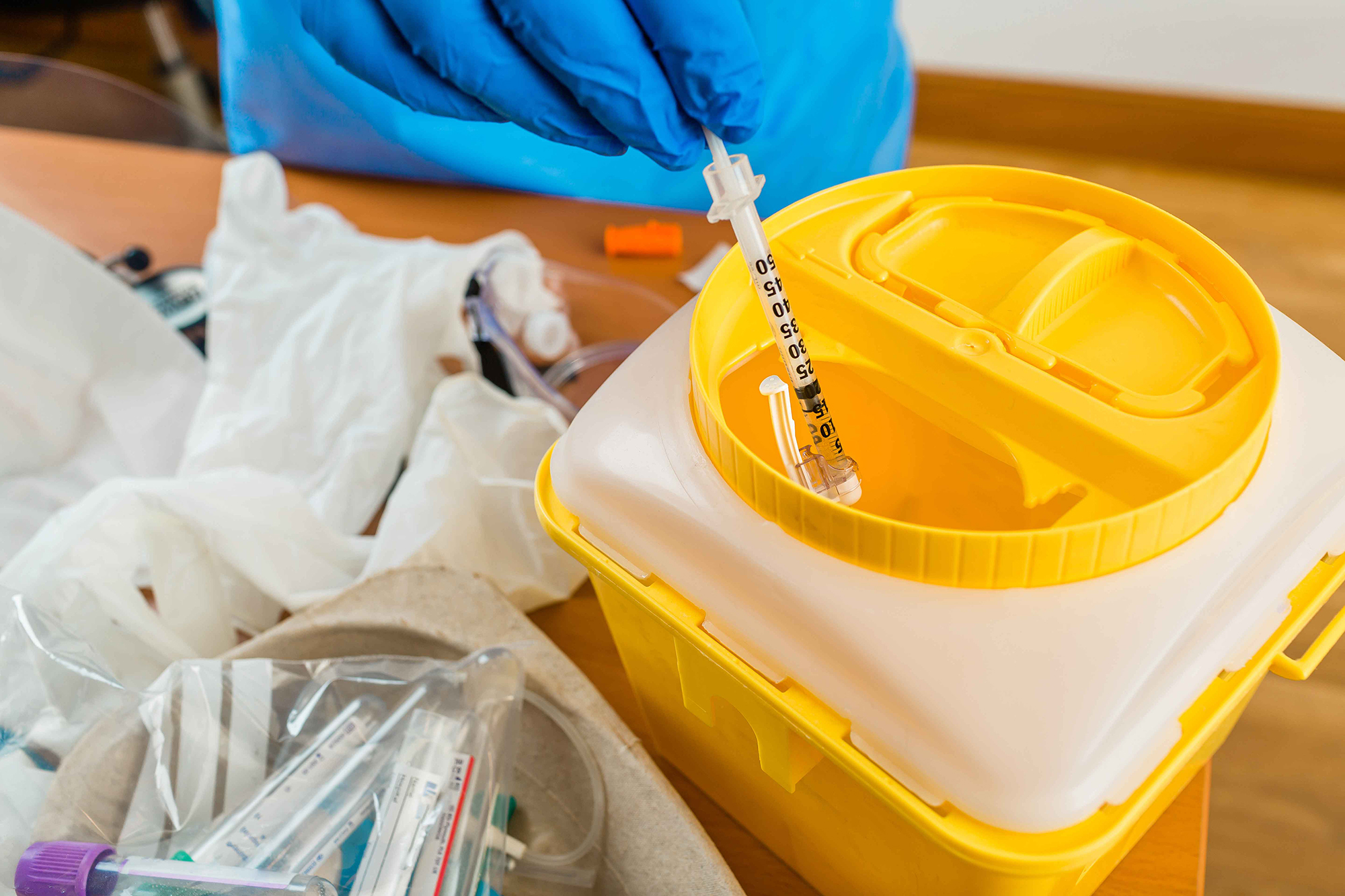
Medical waste treatment without incineration in Georgia
Georgia turns away from Medical waste incineration and adopts an Ecosteryl 250
6 min.
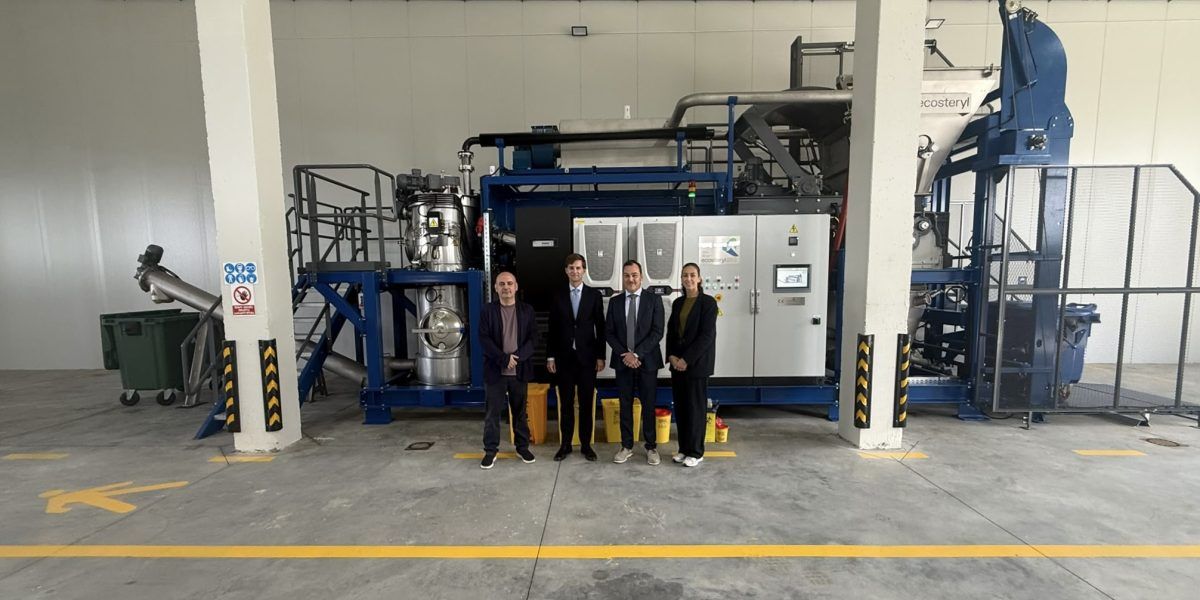
Before running a waste treatment company, Levan Mchedlishvili ran hospitals in Tbilisi. It took him ten years to bring microwave disinfection to Georgia. Today, a single Ecosteryl 250 treats around 4.5 tonnes of infectious waste per day, without incineration.
By the numbers
- 4 to 4.5 t of medical waste treated per day with a single machine
- ~15% of Tbilisi’s medical waste market already covered
- 2026: the year of installation
- 0 combustion: 100% electric, with no steam and no smoke
In September 2026, the Georgian Minister of Environmental Protection and Agriculture inaugurated a unique facility in Tbilisi. For the first time in Georgia and the South Caucasus, hospital waste is being disinfected on-site, without combustion. Behind this project is Scrap, a local service company, and its co-owner, who has been working on the issue for more than fifteen years.
A growing healthcare hub, increasing waste
Georgia has quietly become the Caucasus’ healthcare services hub. Patients come from across the region, and clinics are multiplying. Each one generates infectious waste: dressings, syringes, gloves, tubing and laboratory consumables. Everything must be collected, treated and disposed of safely.
For Levan Mchedlishvili, treating this waste is not a secondary activity. It is an integral part of healthcare.
“Year after year, the number of medical facilities is increasing. Medical waste treatment is an essential service, right alongside patient care.”
Levan Mchedlishvili, Co-owner of Scrap
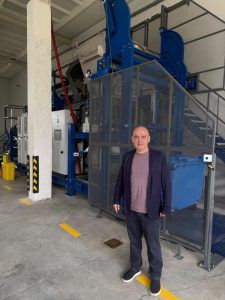
From the hospital corridor to the treatment unit
Levan Mchedlishvili did not enter the medical waste sector through the waste industry, but through hospitals. Starting in 2003, he held management positions in healthcare facilities in Tbilisi. One question kept coming up: how should hazardous waste be disposed of?
In 2008, he began thinking about a solution for the entire country, not just for his own hospitals. In 2009, he launched his own medical waste treatment business. He therefore knows the issue from both sides: as a hospital manager generating waste, and as a service provider responsible for treating it.
2016: Meeting Ecosteryl
In 2016, Levan Mchedlishvili met the Ecosteryl team. From then on, he set himself a goal: to bring this technology to Georgia. It took years of preparation. The result is the first Ecosteryl installation in the Caucasus region.
His motivation is simple. In Georgia, as in most countries in the region, incineration remains the standard for medical waste. It works, but it burns waste, and burning means emissions, smoke, ash and extensive permitting requirements. Levan Mchedlishvili wanted a cleaner solution.
“This technology is 100% free from any danger and pollution; it is 100% environmentally friendly. I wanted not only to help my country, but also to act responsibly.”
Levan Mchedlishvili, Co-owner of Scrap
How the Ecosteryl 250 works
The Ecosteryl 250 is the flagship model in the range. It is designed for operators treating large quantities of hospital waste 24/7. The process takes place in four stages:
- Loading. Containers are lifted and automatically emptied into the hopper. Operators never handle the waste.
- Shredding. A four-shaft shredder reduces the waste into fine particles and decreases its volume by approximately 80%.
- Microwave disinfection. The particles pass through a microwave tunnel and reach approximately 100°C in less than three minutes.
- Holding. A heated hopper keeps the waste at temperature for 1 hour. At the outlet, the waste is dry, unrecognizable and safe.
The machine operates 100% on electricity: no steam, no water, no combustion and no chimney. The treated waste can be disposed of as ordinary waste or sorted for recovery.
Installed in some days
The installation was completed quickly. Ecosteryl technicians assembled and commissioned the machine in three to four days. They then trained Scrap’s technical team in operation and routine maintenance.
“The installation went perfectly. The technicians are true professionals. They trained my technical team, and everything is working perfectly.”
Levan Mchedlishvili, Co-owner of Scrap
A full-service provider with more than 40 employees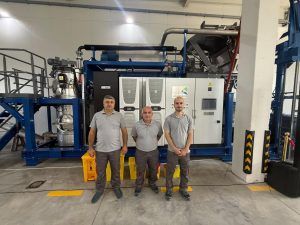
Scrap does more than operate a machine. The company provides hospitals with a complete service, from collection to final disposal.
It has its own logistics, drivers and assistants, as well as collection teams. Managers and operators run the treatment line, while administrative and sales teams handle the rest. In total, Scrap has more than 40 employees.
This model is essential. For a hospital, changing technology is only an option if collection, traceability and service quality remain reliable. Scrap manages the entire chain: hospitals can change technology without changing their habits.
Results: 15% of Tbilisi with a single machine
Today, Scrap treats approximately 4 to 4.5 tonnes of medical waste per day, using only its Ecosteryl 250. This already represents nearly 15% of Tbilisi’s medical waste market.
The Ecosteryl 250 is designed for continuous operation, meaning that the current line still has capacity to accommodate new hospitals.
The biggest challenge was not the machine
When asked what was more difficult than expected, Levan Mchedlishvili does not talk about technology. He talks about people. Hospitals have been using incineration for a long time, and convincing them to change requires patience. Scrap is moving forward step by step, one facility at a time. The company does not present this change as a cost, but as a shared responsibility towards nature and future generations.
This is often the real challenge when a market adopts non-incineration technologies. The equipment is ready, but habits, procedures and contracts need to follow. A trusted local partner who knows hospitals from the inside makes all the difference.
National recognition
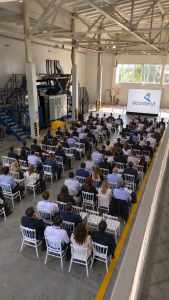 David Songulashvili, Minister of Environmental Protection and Agriculture, inaugurated the site. Also present were Deputy Minister Solomon Pavliashvili and Mikheil Gogolidze, Director of the Solid Waste Management Company of Georgia.
The Ministry welcomed the first use of Ecosteryl technology in Georgia and the South Caucasus. It sees this as an important step in modernizing the country’s medical waste management.
The Minister highlighted the key role of private initiative and investment in this transition, supported by a stable framework established by the state. The project is part of Georgia’s ambition to view waste as a resource and build a green and circular economy.
Advice for those looking to enter the sector
What advice would Levan Mchedlishvili give to someone wishing to enter this sector?
He acknowledges that the question is difficult. Yet his answer can be summed up in one sentence.
“If you feel that you can do something to eliminate hazardous waste and help the planet breathe cleanly, then do it.”
Levan Mchedlishvili, Co-owner of Scrap
Key takeaways
-
First Ecosteryl installation in Georgia and the South Caucasus.
-
A single Ecosteryl 250 treats 4 to 4.5 t/day, representing approximately 15% of Tbilisi’s market.
-
Installation completed in three to four days.
-
A 100% electric alternative to incineration, welcomed by the Georgian government.