


The government of Kenya has decided to entrust the decontamination of its country’s medical waste to Ecosteryl machines. A global contract (in 2 phases) worth €31 million to date for the Mons-based company, which was founded in 1947 and has been active in the treatment of hospital waste for more than 20 years. This contract lasted 10 years between the 1st contact and the shipment of the last machines at the end of this year 2023. Now that shipments are over, this success-story can be shared. And the story may not be over yet…
Open landfill sites filled with syringes, scalpels, and other potential viruses
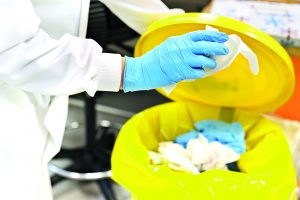
Amélie Matton, Ecosteryl CEO, emphasizes the scale of the challenge: “Situation is absolutely challenging when no valid treatment exists. This was the case in Kenya when I went there for the first time, more than 10 years ago. This is still the case for many countries around the world”.
Once treatment has been carried out, mainly in hospitals, but also at vets, in retirement homes, etc. so-called infectious waste must be “decontaminated”. Despite the WHO’s recommendations to stop using incineration, much waste around the world is simply burned in small burners or at the back of a yard. In 2010 realizing this problematic situation the Government of Kenya decided to tackle the situation head-on and to find solutions. An advisor was appointed who, after analysis, selected the Ecosteryl solution.
Phase 1: Mapping the country and deciding on urgent placements for decontamination
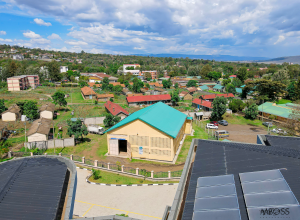
In 2010, talks began between Kenya’s Minister of Health and Ecosteryl. A decisive step was to rank the most populated cities and assess the volumes of waste to offer the optimal strategy. Further to several trips hospitals intended to receive the machines were selected.
Further to many exchanges, a first contract was signed. The buildings were then built by the local authorities. 10 machines were shipped, installed and medical waste treatment could begin.
Phase 2: In 2022, following this 1st positive experience, the Government of Kenya decided to go ahead with the collaboration and to purchase 15 additional Ecosteryl machines.
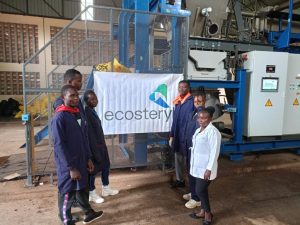 Structure of Kenya is in constant evolution. Kenya is now composed of 47 “counties” that are autonomous in their decision. The selection of new placements where to install additional machines is made together with this Board of Governors; with particular attention to the presence of Ecosteryl technicians on site in order to ensure follow-up and training.
Belgium can boast about decontaminating part of Kenya’s waste.
Romain Dufrasne, Executive Board Member: “Ecosteryl’s customers are either hospitals, private providers or international organizations. Sometimes governments decide to have a global solution”, as in the Kenyan case. “When you notice an entire ecosystem is organizing around your technology for consistent medical waste management and that your impact is positive, it gives a more tangible sense to our project”.
To have such a contract becoming reality lots of Belgian actors stepped in. According to Amélie Matton, Ecosteryl had the chance to rely on various entities: The Ministry of Foreign Affairs through Finexpo, the KBC bank, Credendo which ensures the operation but also the expertise of external consultants, the Embassy of Belgium and the Awex network. “I would like to thank them very much, such contracts are very important for a company like ours and we felt extremely supported”.
An incredible business card to allow other Ecosteryl projects to move forward in other countries.
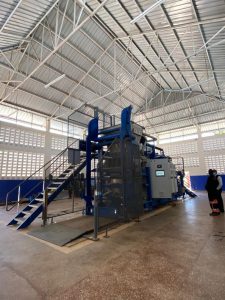
Since the 2000s, Ecosteryl (45 people) has been manufacturing medical waste decontamination machines. These machines that are mainly purchased by private providers are increasingly placed directly in hospitals. “We already cover more than 65 countries, but our goals are even greater. Many countries still have no ecological solution. Kenya’s success could be replicated anywhere else” says Olivier Dufrasne, President.
Currently attending COP28 in Dubai, Olivier Dufrasne is convincing other governments and international organizations to consider the future of medical waste in a greener era.
Each machine was manufactured in Mons, in Ecosteryl’s historical workshop, and was installed by its team of technicians who travel all over the world. In the case of Kenya in particular, a technician is constantly on site to monitor and maintain the 25 machines.
Contact communication:
Sarah Thielens, Communication Manager
sarah.thielens@ecosteryl.com
Whatsapp : +32 478 58 82 66
ITH Salud innovates in the Canary islands with Ecosteryl 250: meticulous medical waste managementIn a context where medical waste management is becoming a major environmental and health issue, IT Médica, a benchmark company in the Canary Islands, has chosen Ecosteryl 250 technology to ensure sustainable, innovative and local treatment of infectious risk waste. Based on the island of Gran Canaria, they have created the ITH Salud division to process medical waste. Since 2021, they have been equipped with a magnificent, clean, modern, secure medical waste management center. We visited them to make a video, and we were impressed by their professionalism – an example!
IT Médica: A Canary islands company at the heart of healthcare since 1994
Founded in 1994, IT Médica (Implantes y Tecnologías Médicas) is a company with 100% capital from the Canary Islands. Historically specializing in the sale of medical-surgical equipment to public and private hospitals in the archipelago, it has established itself as a key player in the fields of laparoscopic surgery, traumatology, neurosurgery, gynecology, urology, as well as plastic and reconstructive surgery.
With offices in Las Palmas de Gran Canaria and Santa Cruz de Tenerife, IT Médica operates across the seven islands. It serves a diverse clientele: public hospitals (especially those of the Canary Islands Health Service), private clinics, laboratories, veterinary and aesthetic centers.
Committed to evolving with the needs of the sector, the company launched a division dedicated to medical waste management a few years ago: ITH Salud. This aims to offer a modern and responsible alternative to the incineration as well as to the export of medical waste to the mainland.
ITH Salud: a strong commitment to innovation in medical waste treatment
From the outset, IT Médica sought to break away from obsolete treatment methods. The previous way of managing – which involved shipping waste to the peninsula for treatment – no longer meets the current challenges of traceability, health safety, and environmental impact.
While searching for cutting-edge technology, the ITH Salud team discovered Ecosteryl. “We found Ecosteryl on social media. What charmed us? The simplicity of the machine, its small footprint, its ease of installation, and the fact that it works with just one operator,” explains the manager, Mr. Arencibia.
Ecosteryl 250: local treatment of biomedical waste with proven performance and no combustion
Installed in Gran Canaria, the Ecosteryl 250 quickly established itself as a strategic lever in the treatment of infectious risk biomedical waste. The disinfection process relies on a technology that is both incineration-free and water-free, combining shredding and disinfection by microwaves and dry heat. This process is both environmentally friendly, efficient, and compliant with the most demanding health regulations.
The 4-Step Treatment Process:
- Automated containers weighing and loading.
- Powerful and secure shredding with air filtration to prevent any emission of contaminants.
- Microwave pre-heating, with rapid temperature increase.
- Final thermal disinfection in a heated hopper for approximately one hour at 100°C.
Following treatment, the waste is completely inert, ready for disposal in landfills, in accordance with the legislation in force in the Canary Islands.
“The Ecosteryl 250 is reliable, simple to use, and our collaboration with Ecosteryl is smooth and responsive. We are very satisfied with the choice we made.”
Logistics adapted to the insularity with refrigerated trucks for the transport of infectious waste
The geographical context of the archipelago imposes specific logistical constraints. The company has successfully addressed these with a fleet of refrigerated vehicles, ensuring the transport of waste in less than 24 hours between producers (hospitals, clinics, etc.) and treatment centers located in Gran Canaria and Tenerife. ITH Salud has thus become the first company in Spain to integrate a medical waste treatment technology without saturated steam or combustion. A pioneering approach that positions IT Médica as a model in the sustainable management of hospital waste.
You would like the same machine? Contact our commercial team.
From machine design to operation: safety at the core of ECOSTERYL
Safety is omnipresent at ECOSTERYL, from the design of machines to their operation, including installation, maintenance, and the overall environment.
Safety is implemented at all levels: compliance with standards, tests, protocols, sensors, safety relays, alarms, and alerts… Our goal is to ensure a completely safe and secure working environment when handling medical waste.
Our mission is to do everything possible to prevent harm to operators, machines, and infrastructure. This is why our safety measures are highly advanced.
Industrial safety: a fundamental priority
In an industrial setting, safety is paramount. Protecting operators, machines, and the environment is a prerequisite for any activity. For ECOSTERYL, which manufactures machines designed to disinfect potentially infectious medical waste, safety is applied at multiple levels.
1) Safety in the design of medical waste treatment machines
 General safety is integrated into the design of machines, incorporating various specific measures for future use. This starts with compliance with legislation, such as platform access dimensions, protective barriers, and grilles. Laws and regulations impose essential health and safety requirements.
To this end, ECOSTERYL machines comply with the CE/EU declaration (formerly known as the Machinery Directive).
 The Machinery Directive and CE marking recommend a series of measures from the design stage to protect operators during machine operation, particularly considering necessary movements. For example, the height of the machine’s staircase steps must be adapted to the safety shoes worn by operators. Additionally, regulations require placing pictograms in critical areas of the machine that could pose potential hazards, such as high temperatures on the retention tank door or the output conveyor.
2) Safety in installation and commissioning
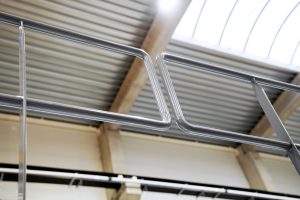 Once ordered and delivered, Ecosteryl machines are installed worldwide by our technicians to disinfect medical waste. Precautions have been taken to ensure that this process is risk-free and does not endanger the Ecosteryl experts responsible for assembly and commissioning.
For example, the guardrail (a protective barrier to prevent falls) of the Ecosteryl 250 walkway was initially designed as a single, heavy piece. It was later split into two parts to make installation safer for technicians.
The entire assembly plan and commissioning procedures incorporate these safety considerations.
3) Safety in the operation of medical waste treatment machines
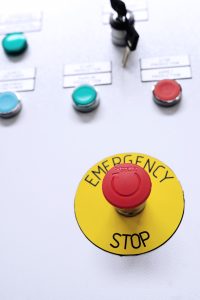 Once operational, the machine could, for various (intentional or unintentional) reasons, lead to hazardous situations or risks that must be anticipated and prevented.
This is why, at every stage of the machine’s operation, an emergency stop button must be accessible at all times to the operator. The placement of these emergency stop buttons (6 in total on an Ecosteryl 250, for example) is precise and strategic. The operator must be able to see and activate them immediately in case of danger. Each machine action is also accompanied by an audible and visual signal, alerting the operator to aspects requiring special attention.
Internal machine safety: alerts and alarms
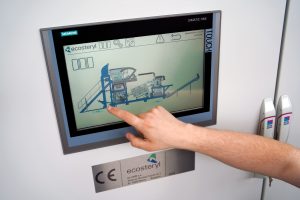 Safety is also integrated into the machine’s general control system. The main screen displays an alarm and alert system with both sound and visual signals.
ECOSTERYL machines have two distinct types of signals:
Alarm (red indicator): Signals an ongoing situation that poses a real danger. In such cases, a part of the machine (or even the entire machine) is stopped. Examples: smoke detector activation in the microwaves, opening of an access door, etc.
Alert (yellow/orange indicator): Provides information that requires monitoring but does not stop the machine’s overall operation. The operator must remain attentive and vigilant. Examples: an overloaded waste bin, an excessively high or low temperature in the cooling system, etc.
4) Safety during the maintenance of medical waste treatment machines
 When switched to “maintenance mode” (a mode exclusively reserved for trained technicians), the machine can become vulnerable. Working on a component with a motor and an axis requires particular caution.
While accident risks cannot be entirely eliminated, they are significantly mitigated.
5) Safety in the working environment
 Safety also extends to the general environment in which the machine operates, considering factors that may impact the health and safety of technicians and experts working around it.
Ecosteryl machines are highly environmentally friendly. They emit no air or ground pollutants, nor do they discharge liquids or effluents. Regular tests are conducted to assess air quality. The Ecosteryl team also prioritizes the use of biodegradable materials whenever possible.
Additionally, noise levels are taken into consideration. Operating at no more than 80 dB, Ecosteryl machines do not require operators to wear hearing protection.
Moreover, the dry heat treatment process does not generate odors (unlike autoclaves) or smoke (as incineration does). This makes working with Ecosteryl machines far more pleasant compared to other medical waste treatment systems.
Created in 1947, the former Ateliers Mécaniques du Borinage (Mechanical Workshops of Borinage) have transformed into Ecosteryl in the 2000s, under the guidance of Philippe Dufrasne.
Today, and after 4 years as CEO (and a total of 15 years working in Ecosteryl), Amélie Matton, who brought Ecosteryl to the success and notoriety it enjoys today, is passing the torch to Romain Dufrasne, 36-year-old, grandson and son of the founders, and the new CEO.
(more…)
Ecosteryl will be exhibiting at the MEDICA trade fair in DüsseldorfEcosteryl is participating in numerous international trade shows. MEDICA is one of the largest B2B medical trade fairs in the world, with over 5,300 exhibitors and 80,000 expected visitors. From November 11th to 14th, join us at Hall 14, Stand E60 in the Belgian pavilion to discuss your medical waste disinfection project.
(more…)
Are you interested in or concerned about the issue of medical or so-called clinical and hospital waste? Do you consider it a business opportunity in your region? Are you considering launching your own business in infectious waste treatment?
Are you currently working on a business plan and assessing the genuine opportunities? Here are some fundamental principles relating to the sector as well as some recommendations to assist you in your thinking and approach.