

A solution implemented at Karantina Public Hospital
Medical waste treatment in Lebanon: the Karantina Hospital leads a national shift
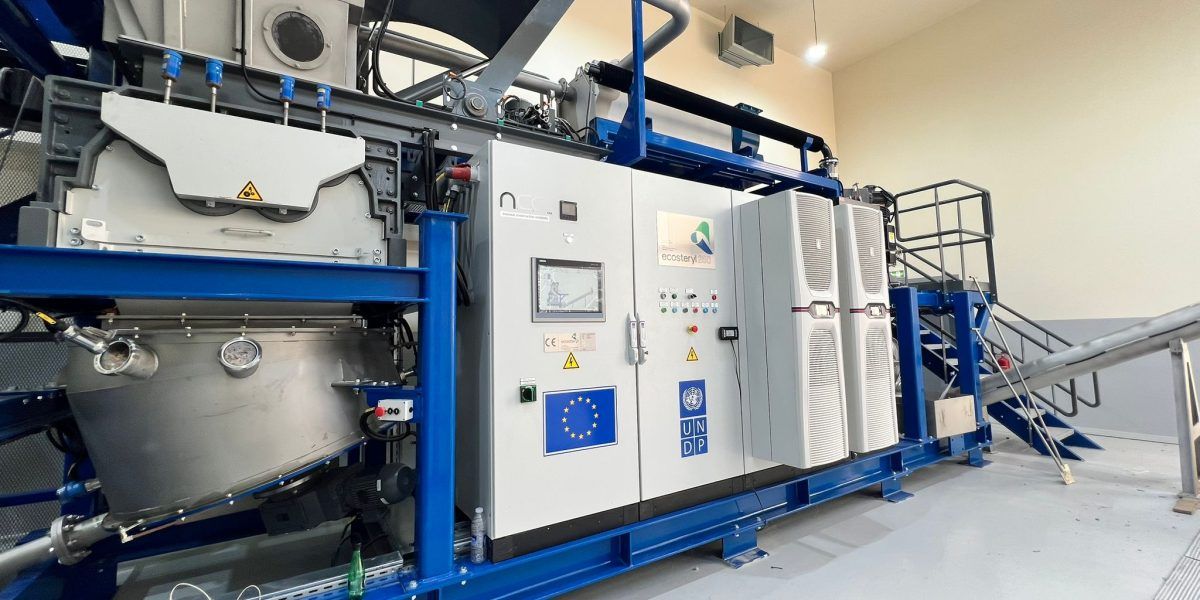
In a country facing health, institutional, and environmental crises, the management of infectious medical waste has become a daily challenge. Lebanon now generates several thousand tonnes of hazardous healthcare waste each year, part of which still remains without secure treatment. The installation of a first treatment unit within a public hospital in Karantina—supported by UNDP, the European Union, and the Lebanese authorities—marks a significant step forward in the deployment of these solutions in Lebanon. Ecosteryl’s electric disinfection technology provides a reliable and well-suited response in a territory where every resource counts.
Table of contents
-
-
- A growing public health and environmental challenge
- The real scale of medical waste in Lebanon: what the available data show
- Why modernisation is needed: limits of incinerators, autoclaves and emergency solutions
- The Karantina treatment centre: a pivotal development
- A 100% electric technology designed for Lebanon
- Voices from the field: how healthcare teams experience the change
- Safety, environmental protection and recovery: a measurable impact
- A regional dynamic: inspiration for MENA countries
- FAQ
-
A growing public health and environmental challenge
Lebanon’s healthcare sector—including hospitals, laboratories, research centres—produces several tonnes of infectious medical waste every day. Needles, contaminated textiles, protective equipment and laboratory residues all require strict handling and secure treatment procedures.
When this waste is not properly managed:
- pathogens can spread;
- healthcare workers face a higher risk of injury and contamination;
- soil, groundwater and coastal areas may be polluted
After years of compounded institutional, economic and infrastructural crises, the issue is no longer merely technical. It is a matter of public health, resilience, and safety for caregiving teams.
The real scale of medical waste in Lebanon: what the available data show
Data compiled by the WHO, the Lebanese Ministry of Public Health, and UNDP highlight several challenges to be addressed:
- Several thousand tonnes of hazardous medical waste are generated each year.
- Only a portion of this infectious waste is properly treated.
- Treatment capacity remains insufficient compared to the country’s needs.
- With the increase in hospital activity, treatment needs are expected to rise by 4,400 tonnes per year over the next five years, placing growing pressure on existing systems.
Lebanon has:
- 183 hospitals;
- nearly 18,000 beds;
- more than 750 laboratories and clinics
Upgrading treatment systems is no longer optional—it is essential.
Why modernisation is needed: limits of incinerators, autoclaves and emergency solutions
Several methods are still used across the country
Steam autoclaves
In theory, they are effective. In practice:
- high energy consumption;
- dependency on stable water networks;
- need for wastewater treatment;
- expensive maintenance;
- frequent replacements;
- explosion risks.
Landfilling or long-term storage
Practices that may be used in certain contexts but do not meet the requirements of sustainable medical waste management.
The Karantina treatment centre: a pivotal development
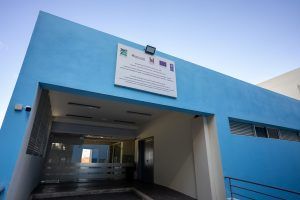
Located inside the Karantina Governmental University Hospital in Beirut, the new treatment centre marks a significant step forward for Lebanon’s healthcare system.
Key partners: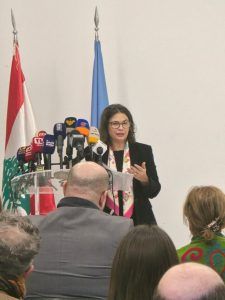
- European Union – project funding;
- UNDP Lebanon – technical assistance;
- Ministry of Public Health and Ministry of Environment – national oversight.
👉 Discover the UNDP testimonial video here.
Capacity and mission
- up to 7 tonnes of hazardous medical waste per day;
- priority service to Beirut and Mount Lebanon (highest waste volumes);
- strengthened sorting, collection and transport procedures;
- development of national tools such as the Healthcare Waste Master Plan.
This centre finally provides public hospitals with a reliable treatment system—even during national crises.
A 100% electric technology designed for Lebanon
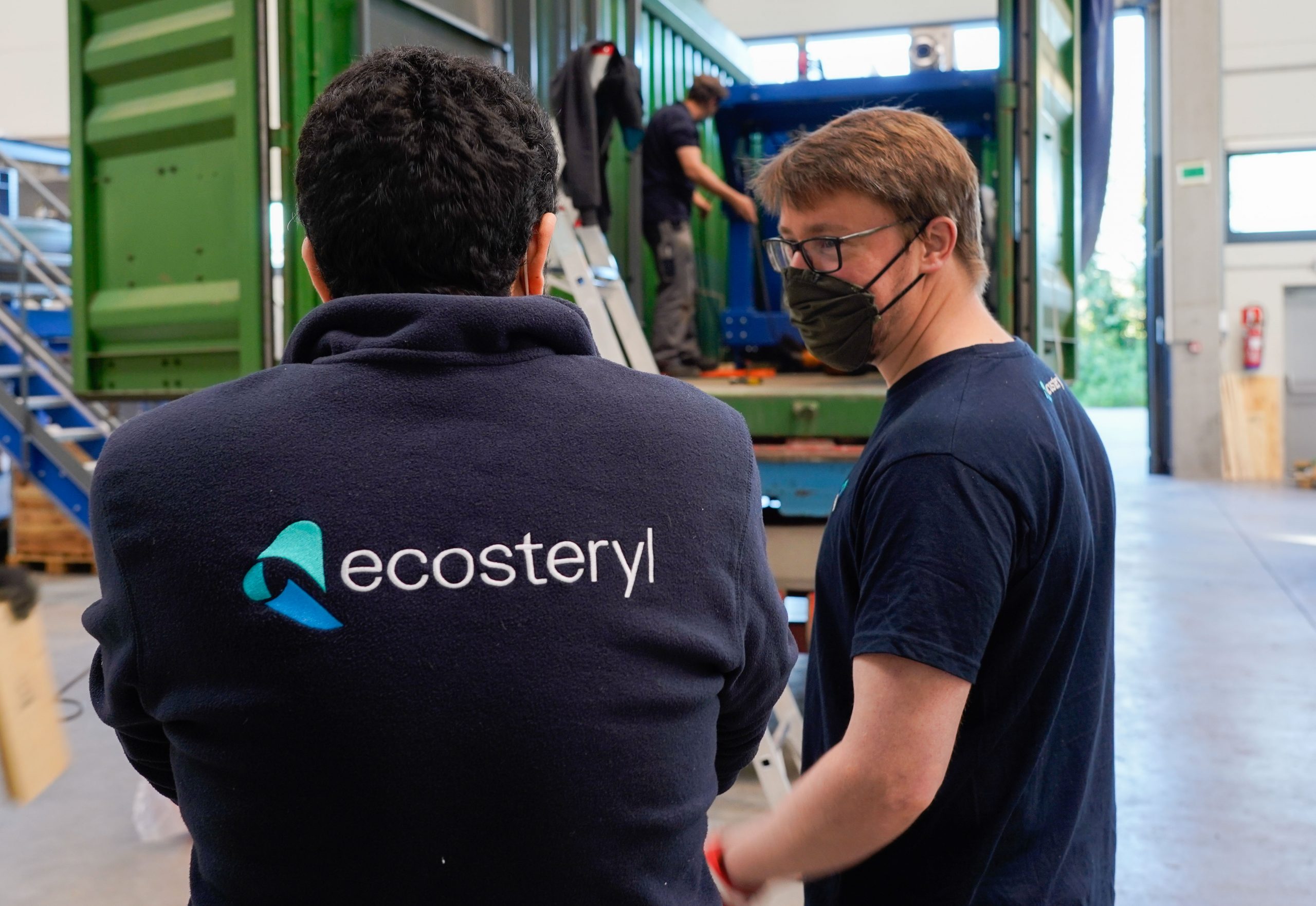
 The centre operates with Ecosteryl’s disinfection technology, already deployed in more than 65 countries.
The process includes:
- a powerful four-shaft shredder with anti-blocking system;
- 100% electric disinfection using microwaves and dry heat;
- treatment without water, steam or combustion;
- continuous operation without shift changes or downtime
Why this technology fits the Lebanese context?
- robust against electrical fluctuations;
- low operational requirements;
- no atmospheric emissions;
- reduced logistics and maintenance costs
👉 Discover our disinfection process here.
Voices from the field: how healthcare teams experience the change
The trasnformation is not only technical: it’s human.
Romy, midwife at Karantina Hospital:
« The healthcare sector in Lebanon continues to grow, and proper treatment is essential. With this system, we feel more at ease because we know the waste is handled safely.»Dr. Michel Matar, hospital director:
« We are proud of this installation. It can receive waste from surrounding hospitals and will have a major impact on public health. It also generates revenue that helps reduce the financial pressure on the hospital.»
These testimonies reflect a shared reality: fewer risks, more stability and improved organisation.
Safety, environmental protection and recovery: a measurable impact
The electric treatment process reduces:
- exposure risks;
- pathogen transmission;
- environmental contamination
After disinfection?
Waste leaves the system:
- inert;,
- non-hazardous;,
- prêts pour un ready for advanced plastic sorting.
In some countries, up to 70% of the waste volume can be recovered, mainly rigid plastics.
In Lebanon, where landfills are saturated, this potential is strategic.
A regional dynamic: inspiration for MENA countries
The Karantina project reflects a broader movement across the Middle East and North Africa.
More countries are shifting toward fully electric, combustion free, low emission technologies, better suited to fragile or high risk environments.
These solutions help :
- strengthen health system resilience;
- reduce transport and storage costs;
- comply with international standards (WHO, US EPA, etc.)
The Karantina centre demonstrates that modernisation is possible even under pressure—when national leadership, international support and reliable technology converge.
Forme
Lebanon’s first electric, non combustion infectious waste treatment centre shows that a country facing compounded crises can still modernise its healthcare waste management in a durable, safe and efficient way.
By combining national governance, international partners and robust electric technology, Lebanon now has a critical tool to protect healthcare workers, patients and the environment.
A decisive step towards a safer and more resilient healthcare system.
👉 Contact our team for a project in MENA countries
FAQ
Q : What types of medical waste require specialised treatment in Lebanon?
R : Mainly infectious healthcare waste, including sharps, contaminated textiles and anatomical waste.
Q : How does microwave technology compare to traditional steam autoclaves?
R : Microwave-based treatment provides uniform disinfection without steam or water, reduces maintenance costs and avoids high-pressure systems.
Q : Does Lebanon have a regulatory framework for medical waste management?
R : Yes. Several guidelines issued by the Ministry of Environment regulate waste sorting, transport and disinfection.
Q : How can needle-related accidents be reduced?
R : Through source-level sorting and automated disinfection systems that minimise manual handling.level sorting and automated systems that eliminate manual handling.
Q : Are electric solutions suitable for rural infrastructure?
R : Yes. Electric systems require no water supply, boilers or fuel-based installations, making them easier to deploy in constrained environments.
Q : Can disinfected medical waste be recovered or recycled?
R : Rigid plastic fractions can be integrated into local recycling streams, while lighter materials may be used for refuse-derived fuel (RDF).
Q : Do electric processes reduce greenhouse gas emissions?
R : Yes. The absence of combustion avoids dioxins emissions andsignificantly reduces the overall carbon footprint.
Q : Are UNDP healthcare waste projects supported by other donors?
R : Yes. The European Union is one of the main contributors to health resilience and health waste management programmes.
Q : How long does it take to set up a treatment centre such as Karantina?
R : Installation timeline depend on the size of the facility, but electric technology generally requires fewer infrastructure adaptations.
Q : Can a single treatment centre serve several hospitals?
R : Yes. Shared treatment facilities are often recommended to ensure consistent waste volumes and optimise operational costs.
Sources :
- UNDP Lebanon (2026) – Protecting Health, Preserving the Environment.
- WHO (2024) – Health-care waste – Fact sheet.
- WHO – Safe management of wastes from health-care activities (manuel).
- Ministry of Public Health Lebanon – Hospitals Statistics.
- Ministry of Environment Lebanon – Healthcare Waste Guidelines.
- US EPA – Alternative Medical Waste Treatment Technologies.
- Healthcare Without Harm – Non-Incineration Technologies Overview.