

A comprehensive approach to transforming national healthcare waste management sustainably
When a country seeks a sustainable solution for its medical waste, Ecosteryl builds the project from A to Z
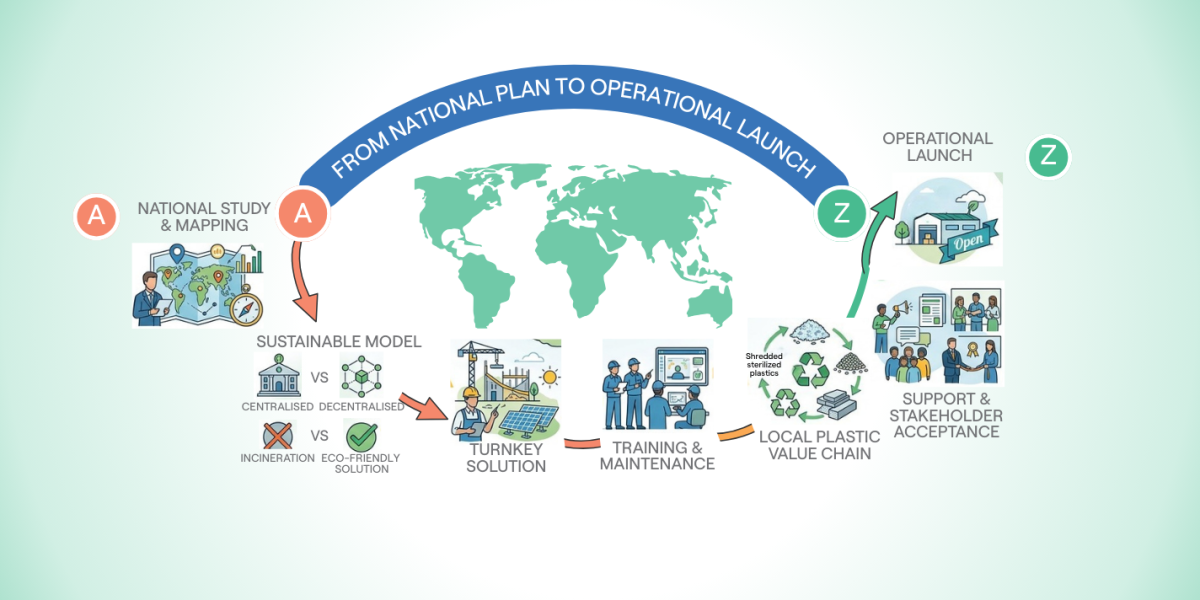
In many countries, the management of infectious medical waste is a sensitive issue, at the crossroads of public health, logistics, and environmental protection. Some states operate with aging infrastructure; others have never been able to establish reliable medical waste collection and treatment systems. When authorities aim for deep transformation, the challenge goes beyond choosing a technology: the entire national medical waste management system must be redesigned.
This is precisely where Ecosteryl steps in, with an integrated approach that supports countries from the initial national waste assessment all the way to the operational launch of medical waste treatment centers.
Table of contents
-
-
- Understanding the national challenge
- The national study: a full immersion in the country’s realities
- Mapping waste sources and understanding real flows
- Designing a coherent and sustainable national model
- The turnkey solution: from construction to operation
- Training teams, establishing routines, and ensuring maintenance
- Creating or strengthening a local plastic recovery chain
- Supporting national acceptance of the project
- FAQ
-
Understanding the national challenge
When a country decides to modernize the management of infectious healthcare waste, the challenges quickly multiply. Centralized waste management systems require strong logistics and reliable road infrastructure; decentralized systems demand dependable equipment and strong local technical expertise. Between these two extremes, each country has its own constraints and dynamics.
When WHO estimates that a significant share of hospital waste — sometimes up to 30% of healthcare waste — is still treated improperly in certain regions. This figure often convinces governments to rethink their national waste management model, not only for health reasons but also for environmental and economic ones.
A poorly structured medical waste management system is costly, creates health and environmental risks, and provides no long-term vision.
The national study: a full immersion in the country’s realities
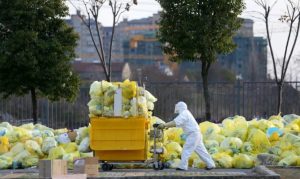 The first step resembles an investigative process more than a technical audit. Ecosteryl teams meet with health authorities, environmental agencies, regulators, hospital managers, and also less visible actors: local waste collection companies, transport operators, NGOs, and international donors active in the country.
This work helps identify not only who makes decisions, but also how decisions circulate within the national healthcare system. Some countries operate with a very clear centralized structure, while others rely on a mosaic of regional agencies.
An economic analysis follows: which international financing mechanisms can be mobilized? What projects are already underway? Is there an open public tender or a clear political will to modernize healthcare waste management?
Finally, the technical assessment reveals the reality on the ground: incinerators out of service, autoclaves installed but rarely used due to lack of water or spare parts, or areas where waste is simply buried.
It is during this phase that the country and Ecosteryl lay the foundations for a realistic and financially viable national medical waste management project.
Mapping waste sources and understanding real flows
A map can reveal in seconds what months of reports sometimes struggle to express.
By overlaying demographic data, road networks, hospital density, and estimated volumes of infectious healthcare waste, waste sources become clearly visible. Some capitals concentrate a third of the country’s medical waste, while other regions — remote or poorly connected — require autonomous treatment solutions.
Ecosteryl then analyzes existing waste flows: how does medical waste currently circulate? How many kilometers are traveled? Which areas are never reached by formal collection systems?
This analysis allows several national waste management scenarios to be modeled:
- a centralized model around major cities
- a semi-centralized strategy based on regional hubs
- or a more decentralized system for rural territories.
This step often becomes a key moment of realization for decision-makers, highlighting the gap between the current system and the optimal national healthcare waste management model.
Designing a coherent and sustainable national model
The next stage is to build a national master plan for medical waste management, capable of guiding the system for 10 years or more.
Discussions revolve around several key questions:
- Where should medical waste treatment centers be located?
- What treatment capacity should be installed to absorb future healthcare waste volumes?
- What level of redundancy is needed to avoid service interruptions?
Technology comparison is also part of this process. Incineration, autoclaves, microwave treatment systems, and hybrid solutions all have advantages and limitations.
In some regions, limited access to water makes autoclaves difficult to maintain. In others, incinerator emissions become a sensitive environmental issue.
Ecosteryl’s electric treatment technologies, which operate without combustion and with minimal dependence on external resources, offer an alternative adapted to many environments. However, they are only integrated after a comprehensive contextual and technical analysis.
Gradually, the national healthcare waste management model takes shape: a network of sites, adjusted capacities, clear logistics, and reliable projections for the coming years.
The turnkey solution: from construction to operation
This is often the moment when countries fully realize the scope of a turnkey medical waste management solution.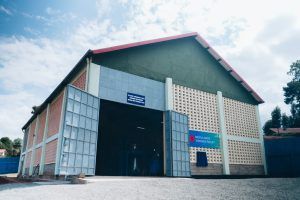
Once the national plan is validated, Ecosteryl designs a complete solution, which may include:
- construction of medical waste treatment centers
- supervision of infrastructure works
- compliance with local environmental regulations
- coordination with national contractors.
In some regions, solar energy becomes a strategic component, ensuring the stability of medical waste treatment systems even where the electrical grid is fragile.
Transport management is also integrated. Whether the country wants to purchase its own waste collection trucks, delegate the service to a local company, or receive technical recommendations, Ecosteryl adapts to the chosen model.
Finally, to guarantee operational continuity, an initial stock of spare parts — sometimes covering up to five years — is delivered from the start.
👉 Explore turnkey solutions: case study: Gambia, Kenya, …
Training teams, establishing routines, and ensuring maintenance
The quality of a medical waste treatment system ultimately depends on the people who operate it.
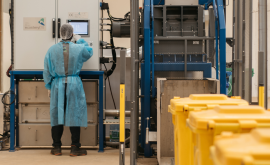
Ecosteryl organizes on-site operator training, combining theoretical sessions, practical exercises, real-life simulations, and dedicated modules on safety procedures and plastic sorting.
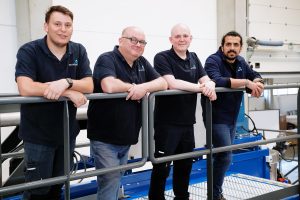
Meet our after-sales team (from left to right): Diègo Pieters, Michaël Vounck, Boris Dupont, and their manager, Romaric Kazarian.
In large-scale projects, an Ecosteryl technician may remain in the country for several months or even years. This local presence accelerates technology transfer, helps resolve technical issues quickly, and reassures national authorities.
Maintenance is then supported through remote monitoring systems, while trained local technical teams are able to intervene rapidly when needed.
Creating or strengthening a local plastic recovery chain

Treating infectious medical waste is only the first part of the story.
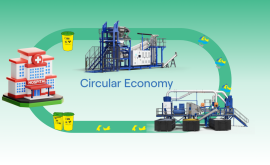
The technology makes it possible to produce clean and sorted plastic materials, which can be directly recycled. For some countries, this represents a new circular-economy opportunity.
Ecosteryl studies the existing recycling ecosystem: recycling companies, plastic industries, and the ability to convert materials into plastic pellets or finished products.
This analysis determines whether the R-Steryl plastic recovery solution can realistically integrate into the local industrial ecosystem.
When it does, hospital waste becomes a valuable resource. In countries where industrial job creation is a national priority, this aspect significantly changes the perception of the project.
Supporting national acceptance of the project
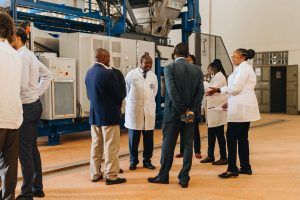 Opening a medical waste treatment center is not enough — public support must also be built.
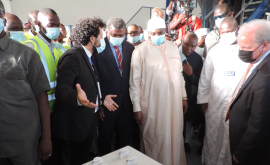
Ecosteryl provides communication materials, educational tools, safety signage, protective clothing, explanatory videos, and sometimes support for press conferences or official inaugurations.
In many countries, this communication effort is essential to reassure nearby communities, prevent misinformation, and demonstrate that medical waste treatment can be safe, transparent, and environmentally controlled.
Modernizing national medical waste management systems is not just a technical project. It represents a transformation in public health, environmental protection, logistics, and governance.
By adopting a global and integrated approach, Ecosteryl helps countries build robust and sustainable healthcare waste management systems, capable of protecting populations today and in the future.
FAQ
How can a country accurately estimate the quantity of infectious medical waste it produces?
The estimation generally relies on three elements: the number of hospital beds, the type of healthcare facility (regional hospital, clinic, primary health center), and the application of ratios recommended by the World Health Organization (WHO). These ratios vary by region but typically range between 0.2 and 0.8 kg of infectious healthcare waste per bed per day.
What international funding can support a national medical waste management project?
Countries often rely on international donors such as the World Bank, UNICEF, the African Development Bank, the European Union, or bilateral cooperation programs. These institutions can finance medical waste treatment infrastructure, equipment, operator training, and renewable energy solutions used in healthcare waste management systems.
Why are more countries looking for alternatives to incineration?
Incineration produces air emissions, requires strict environmental monitoring, and involves heavy maintenance requirements. In some countries it has also become a politically sensitive environmental issue, which explains the growing interest in electric medical waste treatment technologies without combustion.
How is the ideal location for a national medical waste treatment center determined?
Authorities combine demographic, geographic, and logistical criteria, including:
- hospital density
- road accessibility
- maximum acceptable collection distance
- safety conditions
- land availability
Accurate waste mapping and logistics analysis helps avoid treatment center locations that would be inefficient or economically unviable.
Is a 100% electric technology suitable for countries with unstable power grids?
Yes — provided that a a site-specific energy feasibility study is conducted in advance. In some projects, the integration of solar panels or hybrid energy systems stabilizes the power supply. The fact that the technology does not require water, fuel, or steam makes it easier to deploy in fragile or remote regions.
Can a plastic recovery chain work in a country where recycling is still limited?
Yes, but only after analyzing the local market reality, including:
- existing recycling industries
- potential buyers of recovered materials
- types of recyclable plastics available
Ecosteryl conducts this assessment before proposing the R-Steryl plastic recovery solution, in order to avoid creating a recycling stream without real industrial outlets.
Who trains the operators responsible for handling waste and operating the machines?
Ecosteryl technicians provide on-site training directly in the country. Training programs combine theoretical modules, practical exercises, plastic sorting procedures, and safe handling of infectious healthcare waste, based on international guidelines and best practices.
How does maintenance work in remote or difficult-to-access countries?
Maintenance relies on a two-level system:
- remote monitoring and supervision to quickly diagnose issues
- local intervention by trained technicians
In several national projects, Ecosteryl installs a resident technician who supports the country over the long term.
Can a national medical waste treatment project be powered partially or fully by solar energy?
Yes. Solar integration depends on:
- the level of solar exposure
- the stability of the electrical grid
- the energy needs of the treatment center
In some regions, solar energy even becomes a key guarantee of operational continuity.
How long does it take to deploy a turnkey national medical waste management solution?
The timeline mainly depends on:
- the construction of infrastructure
- political approval and validation
- administrative procedures
Once these elements are aligned, the installation and commissioning of the medical waste treatment systems are generally completed quickly.
Sources used in this article :
World Health Organization (WHO)
WHO – Safe Management of Wastes from Health-Care Activities, 2nd Edition, 2014
International reference mentioning the production ratios of healthcare waste (0.2 to 0.8 kg per bed per day depending on the region).
WHO – Health-care waste, Fact Sheet (updated 2023)
Provides global statistics on the proportion of hazardous waste generated by healthcare systems worldwide.
UNICEF
UNICEF – Guidance on Healthcare Waste Management, 2021
General recommendations for medical waste management infrastructure in healthcare facilities, particularly in developing countries.
World Bank – Environmental and Social Framework and financing mechanisms related to healthcare infrastructure projects.
Referenced in the article as an example of potential international funding sources for national medical waste management programs.
African Development Bank (AfDB)
African Development Bank – Environmental, public health, and waste management programs.
Cited as an example of multilateral funding available for national healthcare waste infrastructure projects.
European Union / Environmental initiatives
EuropeAid Programs and Global Gateway Initiative
Funding mechanisms supporting sustainable infrastructure projects, including healthcare waste management systems.
International technical guides and recommendations
UNEP (United Nations Environment Programme) – Global Waste Management Outlook, 2022
CDC (Centers for Disease Control and Prevention) – Guidelines on infection prevention and healthcare waste management, referenced as a secondary source regarding waste segregation practices.