

Waste valorisation
Medical waste: when waste becomes a secondary raw material
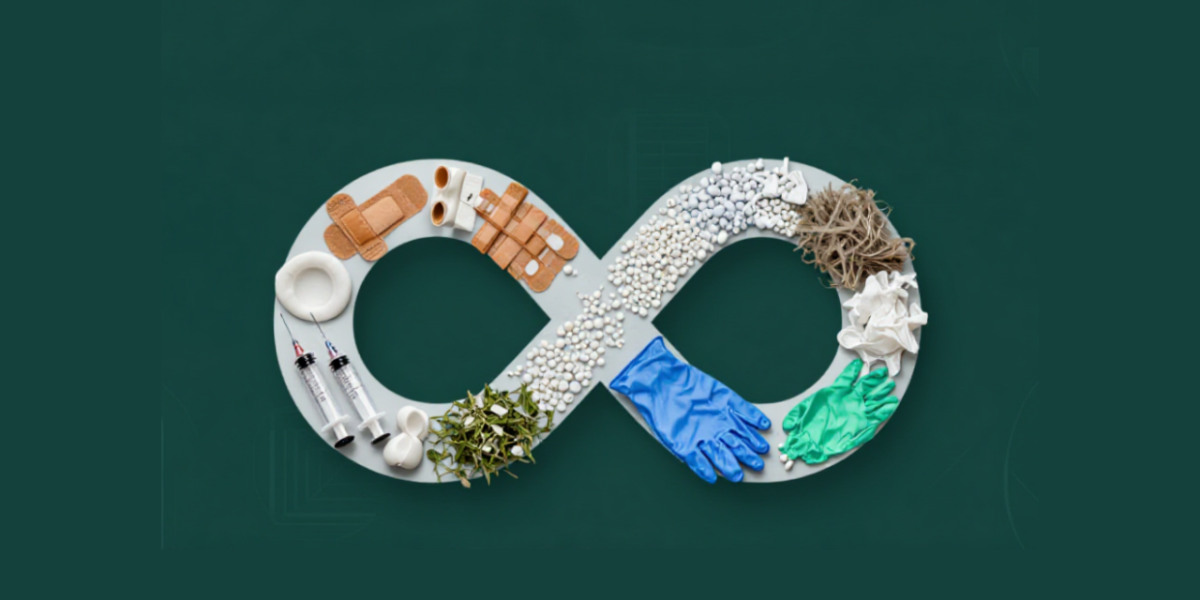
An infectious medical waste is not condemned to end up burned or buried. Properly treated, it can become a secondary raw material. That is the whole point of medical waste valorisation: instead of paying to destroy a material, it is recovered and given a second life. At Ecosteryl, this transformation relies on a complete chain, from decontamination to sorting, capable of recovering up to 80% of medical waste.
Table of contents:
- Why medical waste still ends up burned or buried
- The step that makes the material reusable
- Three fractions, three destinies: R-steryl sorting
- From material to product: what healthcare plastic can become
- An environmental and economic benefit
- Frequently asked questions
Why medical waste still ends up burned or buried
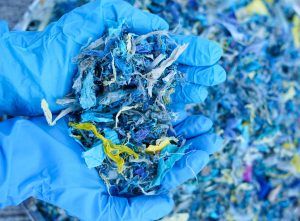
For a long time, the final disposal of infectious medical waste after treatment came down to two options: incineration or landfill. Two solutions that destroy the material instead of recovering it. Healthcare plastic, present in large quantities in care settings, thus goes up in smoke or into landfill. This is a double waste. An environmental waste, because these petrochemically derived plastics release pollutants when burned. And an economic waste, because we pay to eliminate a resource that could have been valorised.
To understand the nature of this waste and the share that can actually be recycled, we detail this in our article on types of medical waste.
The step that makes the material reusable
To valorise infectious waste, it must first be rendered harmless. That is the role of Ecosteryl machines, a 100% electric alternative to incineration. The waste is shredded by a 4-axis industrial shredder into fragments of less than 35 mm, then brought to approximately 100 °C via microwaves and held at that temperature for nearly an hour in a holding tank. The process ensures disinfection at 6 log10, meaning a 99.9999% reduction in micro-organisms. The treatment is carried out without combustion and without water: there are therefore no direct CO2 emissions linked to on-site combustion. Output result: waste reduced by approximately 80% in volume, dry, unrecognisable and above all with a particle size perfectly suited for sorting. It is precisely this shredded material quality that makes the next step possible.
We explain this breakthrough in more detail in our article on innovation towards the circular economy, and the full process on our decontamination process page.
Three fractions, three destinies: R-steryl sorting
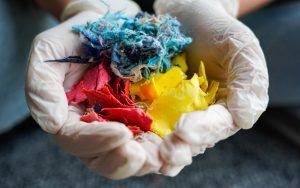
Once the waste has been decontaminated and dried, it enters the second step: sorting. The R-steryl is a one-of-a-kind sorting centre positioned downstream of Ecosteryl machines. Using an infrared optical sorter and an aeraulic system, it separates the shredded material into three distinct fractions, with a processing capacity of up to 2 tonnes per hour.
Fraction 1: plastics
This includes PET, PP, PVC, PS, LDPE, HDPE, etc. Where does this fraction go? Into recycling through valorisation processes, including plastics manufacturing to be transformed into pellets, for example.
Fraction 2: the light fraction
This includes light materials. Where does this fraction go? Into energy valorisation processes as substitute fuels (RDF or SRF).
Fraction 3: the remainder
This is the non-valorisable residual fraction. Where does this fraction go? Either back into the sorting centre with different parameters to select materials present in this fraction, or to landfill.
It is the first fraction that changes everything. The sorted plastics, separated by family, become reusable by the plastics industry, exactly like a raw material. In total, the R-steryl recovers and valorises up to 80% of the waste.
From material to product: what healthcare plastic can become
Once transformed into pellets or flakes by a recycler, these plastics can be used to manufacture new objects. This is where the loop truly closes: the material from healthcare settings re-enters the economy in the form of useful products. Specialist players are already exploring these outlets. Various start-ups in collaboration with Ecosteryl have, for example, the project of transforming healthcare waste into durable construction materials such as panels or thermal insulation, and tests are promising. This type of initiative illustrates the potential of valorised material: the plastic from a care unit could, tomorrow, end up in a wall, a piece of furniture or an everyday object. Ecosteryl follows these innovations closely, as they naturally extend the sorting logic of the R-steryl.
An environmental and economic benefit
Valorising rather than destroying offers a double advantage. On the environmental side, every kilo of plastic recovered is a kilo that is neither burned nor buried, and that replaces virgin material. On the economic side, the equation is reversed: instead of paying to dispose of waste, the facility or operator transforms that cost into a revenue stream by reselling a raw material. This circular approach reflects Ecosteryl’s commitment, as a B Corp-certified company, to responsible practices. R-steryl is recommended for any customer already operating an Ecosteryl machine who wishes to move from an elimination logic to a valorisation logic.
For the most frequently asked questions about our solutions, also consult the 10 questions we are asked most often.
Frequently asked questions
Which plastics from medical waste can be recycled?
After disinfection and sorting, the main families of valorisable plastics are PE, PP, PVC, PS, LDPE, HDPE and PC. They are separated by type.
Is medical waste safe once treated?
Yes. Before any sorting, the waste passes through an Ecosteryl machine which decontaminates it at 6 log10, meaning a 99.9999% reduction in micro-organisms. It comes out dry, unrecognisable and harmless, which allows it to be handled and valorised safely.
What does the recycled material actually become?
The sorted plastic fraction is reusable by industry. Often transformed into pellets as second-generation plastic, it can be used to manufacture new objects, including construction materials such as panels or insulation.
In summary
Medical waste is no longer an end point. Thanks to Ecosteryl decontamination followed by R-steryl sorting, it once again becomes a secondary raw material.
The plastics recovered after disinfection are sorted by R-steryl. These plastics are then directed to appropriate valorisation channels. After preparation by a specialist recycler, they can be transformed into secondary raw material and reintroduced into the plastics industry.